
Providing audiences the background to understand what intellectual property is, why it is valuable, and how to use it has gotten a little easier.
Sorting out which information is most necessary about patents, copyrights and other IP – and how much information is too much – has traditionally been the domain of lawyers. But attorneys’ deep familiarity with the topic is typically ill-suited for communicating what most audiences need to know.
Casey Fiesler has risen to the challenge and if her number of TikTok likes is any indication, 3.3 million, she is succeeding. Professor Casey, as she is known, has posted hundreds of short videos on social media platforms that explain aspects of intellectual property to students, creators and others baffled by what IP means in a post-digital, increasingly A.I. world.
Casey, Professor of Information Science at the University of Colorado, Boulder, researches and teaches in the areas of technology ethics, internet law and policy, and online communities. Needless to say (or maybe necessary to), IP rights are a significant part.
The widespread perception that intellectual property is only for lawyers and big companies with deep pockets has changed little over the decades. While grounded in reality, the perspective is also inaccurate. IP helps level the playing field for smaller businesses and independent creators, while it can provide many larger ones access to capital and higher market value.
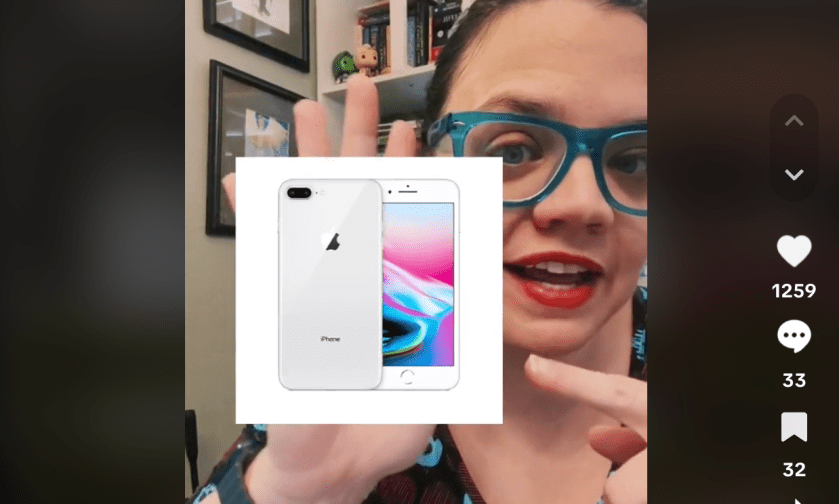
Casey’s video on the most basic of IP basics – thge IP rights associated with and iPhone – is the first content on the videos page of CIPU’s IPBasics.org information portal.
Making IP Relevant
What can be done to make IP more engaging? One solution is to have educators who are not practicing attorneys teach it. Educators, including creators and business managers, are better able to speak more freely and with less concern for the technical aspects of the law.
Another solution is to take advantage of social media, which is where so many – especially Gen Zers – already spend so much of their time. The third is to situate IP within its natural context — business. While most of us will never file a patent application, we all own copyrights (issued or not) and interact with trademarks daily in the form of brands, entertainment and art.
Through her work on TikTok and on other platforms, Professor Casey has proven it’s entirely possible to make learning about IP more entertaining. Trained as a lawyer and with a Ph.D. in Human-Centered Computing, she has created and posted a range of entertaining videos that provide information about tech, ethics, law, the internet and IP rights.
With more than 100,000 followers and three million likes on TikTok alone, Casey Fiesler is a resource to be reckoned with. I (Bruce Berman) spoke with the talented creator about her social media success and perspective for Episode 3 of Season 3 of my podcast, Understanding IP Matters, which dropped last week. The title: “Influencer-eductor is attracting diverse audiences to IP awareness and ethics.” Give it a listen.
Read IPWatchdog’s summary by Madeleine Key for written excerpts from the episode with Fiesler.
Not the Enemy
Personally, while strong on conveying the basics and key issues, like privacy, I do not always agree with Professor Casey’s positions on copyright and fair use. She supports the work of the Electronic Frontier Foundation, whose policies disproportionately benefit of the tech giants over SMEs and independents , and believes that most A.I. scraping should not require license a license under fair use. This does not diminish her importance as an influencer who provides important, accessible information about tech ethics, online communities and IP rights that need to be on everyone’s radar.
Casey’s work resonates with young people, many of whom are clueless about the the purpose or benefits of IP. She reminds them that IP rights are not the enemy, but how some owners choose to use them can be.
Image source: TikTok.com, ProfessorCasey
 ipcloseup.com