
“The Best Inventions for 2023,” Time magazine’s revealing overview of patented breakthrough solutions to life’s challenges, illustrates the breadth of industries, technologies and businesses building a path to the future.
“Best Inventions” suggests technological innovation is everywhere, including less obvious places, like fitness and parenting, and will continue to grow and be shared.
Fifty special mentions are included, such as the world’s most powerful supercomputer and a game-changing entertainment venue that are changing how we live, work, play, and think.
The twenty-two inventive categories include:
AI, Accessibility, Apps & Software, AR & VR, Beauty, Consumer Electronics, Design, Experimental, Fitness, Food & Drink, Green Energy, Household, Medical Care, Outdoors, Parenting, Productivity, Reuse & Recycle, Robotics, Sustainability, Transportation, Wellness, Special Mentions.
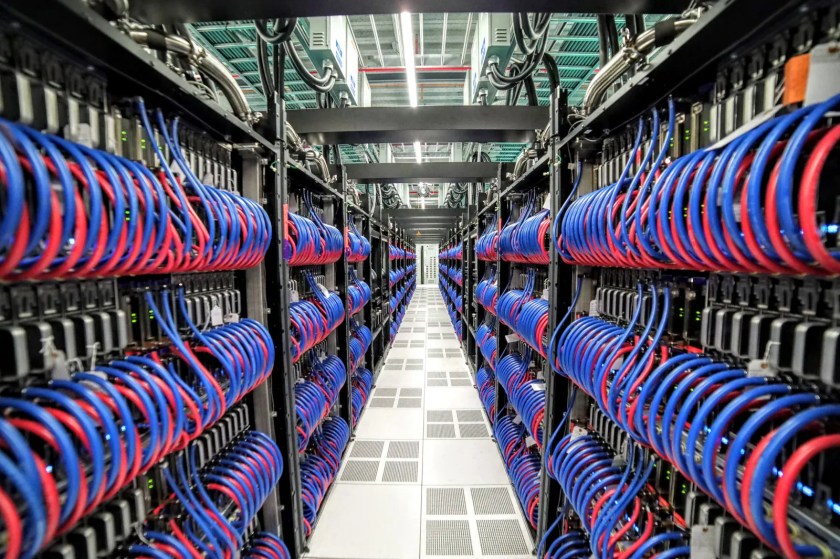
Many of the inventions were developed by well-known research sources, such as Sony, BMW, Sonos, Apple, NVIDIA, but others are from small and medium size businesses and independent inventors all over the world. HP’s Enterprise Frontier Supercomputer, pictured above, is being used for studying black holes to climate modeling.
“People compare [the supercomputer] to the equivalent of landing on the moon in our generation, in terms of an engineering feat,” said Nic Dubé, who led the project for HPE. “This is more than a miracle. This is statistical impossibility.”
Quantum computing being developed by IBM, Microsoft, Google and others, and possibly ready for use by the end of the decade, may surpass HPE’s feat. The implications for disease detection, drug discovery, design and prediction are overwhelming.
Review the List
The entire list of Time’s 200 inventions is worth perusing. It provides a sense of the magnitude of inventorship today, not only what is being done, but what will be.
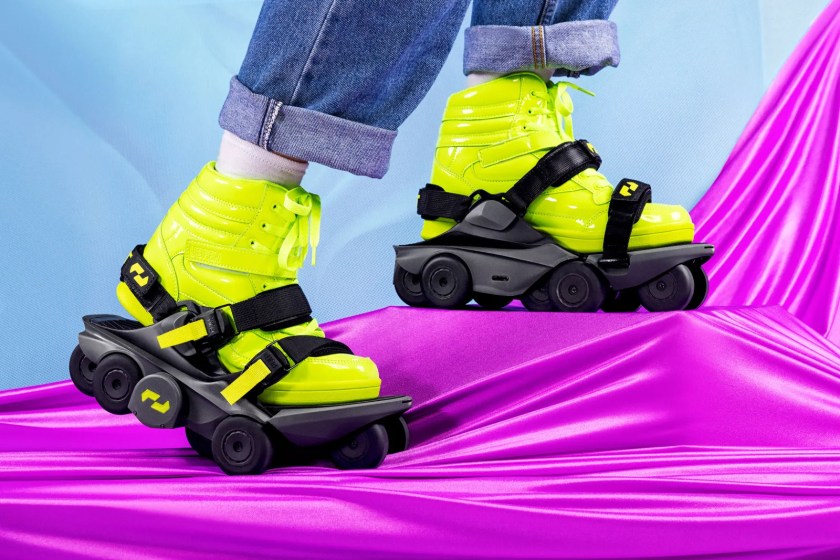
From tiny Shift Robotics, battery-powered “Moonwalkers” (above), wheeled shoes allow people to walk normally (not skate), just faster and more easily. The Moonwalkers use AI to sense when you are speeding up or slowing down and adjust accordingly. The wheels lock automatically when you are taking the stairs.
Tested in Pittsburgh, Baltimore, New York City, and Washington, D.C., “the shoes allow you to walk at speeds up to 7 m.p.h.—250% faster than your average gait.” Moonwalkers are currently available for purchase.
“Upon graduating from Carnegie Mellon’s Robotic Institute,” explains Shift Robotics’ website, “Xunjie Zhang teamed up with a group of really talented race car engineers, roboticists, and sneaker designers to do one thing – to pack everything you find in an electric vehicle into a form factor of a shoe so that you can effortlessly walk at a running speed.”
Time’s methodology, which included relying on its global editorial staff and outside submissions, can be found here.
Image source: Elizabeth Renstrom for Time
 ipcloseup.com