
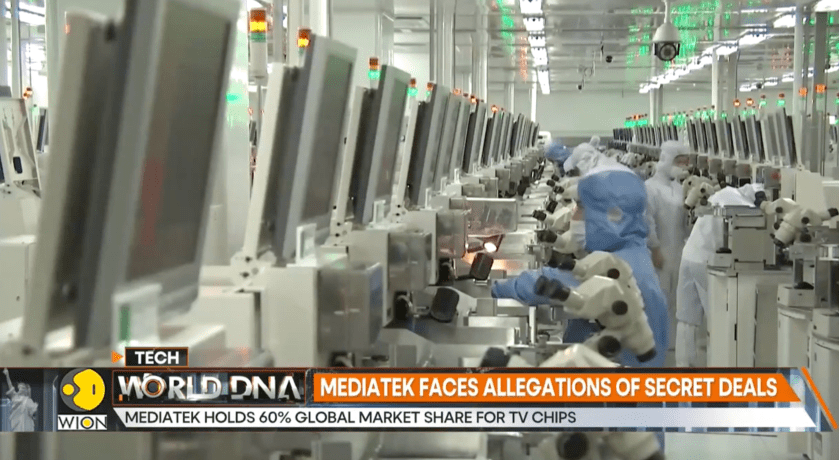
In a U.S. battle between two large Taiwanese semiconductor manufacturers responsible for most smart TV production, ill-formed American perceptions about patent licensing and “trolls” are being used to influence public opinion and, apparently, the court.
Realtek and Mediatek, both based in Taiwan, make chips used in smart televisions and set-top boxes. MediaTek owns nearly 60% of the global market share for television chips, according to Realtek.
Realtek accused MediaTek last year of paying IPValue a “secret litigation bounty” to file meritless patent-infringement lawsuits in the United States and disrupt Realtek’s competing business, according to Reuters.
MediaTek has convinced a federal court to reject a lawsuit accusing it of illegally partnering with a patent owner, IP Value, to file meritless patent lawsuits to drive rival Realtek out of the market for smart-television chips.
According to the Fabizio Ward survey commissioned by litigant Realtek, abuse is a pressing concern for consumers:
- More than eight in ten respondents (84%) voiced concern about price increases for consumer electronics.
- Nearly three-quarters of voters (73%) said they would be more likely to support companies that actively join the fight against patent trolls.
- In addition, 82% expressed concern that unchecked abuse could lead to supply chain shortages for products made for U.S. customers.
The survey says respondents believe, patent trolling stifles innovation:
- Similarly, 81% worry about foreign firms exploiting U.S. courts to stifle American innovation and threaten economic interests – a concern that crosses traditional partisan divides.
- 81% of voters agree that every dollar spent fighting frivolous patent lawsuits means less money for innovation, customer service improvements, or lower prices.
Poor public IP perception – From bad to worse?
The irony here is that the perceptions on the part of the American public about the impact of frivolous patent lawsuits may be accurate. The real question is are they simply misinformed or is a survey of this nature ultimately perpetuating more misinformation and negative perspectives based on what people think they know?
In either case, the impression being formed from this survey is that Americans are unfavorably disposed to licensing (not just “bad” patent licensing), patent plaintiffs and those who attempt to support them.
The survey was sponsored by defendant Realtek Semiconductor Corp., which is has been pursing antitrust litigation against its larger rival, MediaTek, in U.S. courts, and conducted by Fabrizio Ward LLC. According to its website, Fabrizio Ward “was a key force behind [President] Trump’s 2024 victory, delivering razor-sharp strategy through a turbulent cycle.”
Accurate, perhaps, about the myths people believe, this survey is a tool for perpetuating for a negative patent and IP rights narrative. If people believe that this is what others believe, then it must be true.
This defendant-commissiioned research serves as a wake up call for creators, IP owners, policymakers, investors and educators that Americans are failing to make fact-based conclusions about what patents are for and who they benefit, and IP-adverse parties are attempting to benefit from it and their expense.
These true statements of misguided public opinion influence policymakers, shareholder and others.
This defendant-commissiioned research serves as a wake up call for creators, IP owners, policymakers, investors and educators that Americans are failing to make fact-based conclusions about what patents are for and who they benefit.
The research encourages the public to consider a narrative that is out of context, myth-perpetuating and convenient to defendants in a particular case or industry. They need to know the full story, regardless of the interests of the defendant.
“When the patent trolls win, Americans lose,” says Realtek General Counsel, Gina Hung, a distortion in an attempt to favorably position the company in its case in its case agains Media Tek.
“Frivolous patent trolling suits are already a hidden tax on consumers and a drag on competition and innovation,” she says alluding to a long-dispelled myth about IP rights.
Ms. Hung neglects to add that a relatively small number of patent suits today fall into the frivolous category. In most cases, they are too costly and time consuming to rely on settlement value.
The message sounds simple. The facts are much more complex.
More productive public IP research would ask, Why do non-practicing entities (NPEs) exist, what do they achieve, and why does virtually every defendant in a patent suit assert the claims against it are “frivolous?”
Image source: WION
 ipcloseup.com