
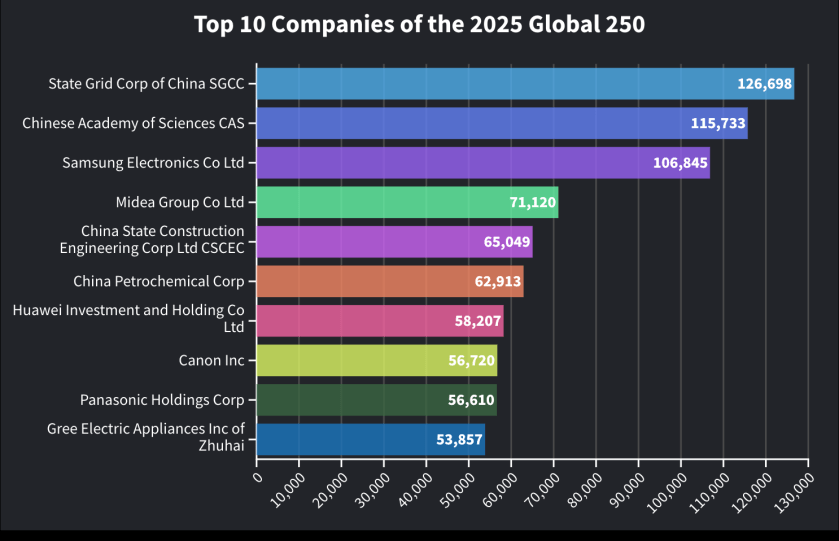
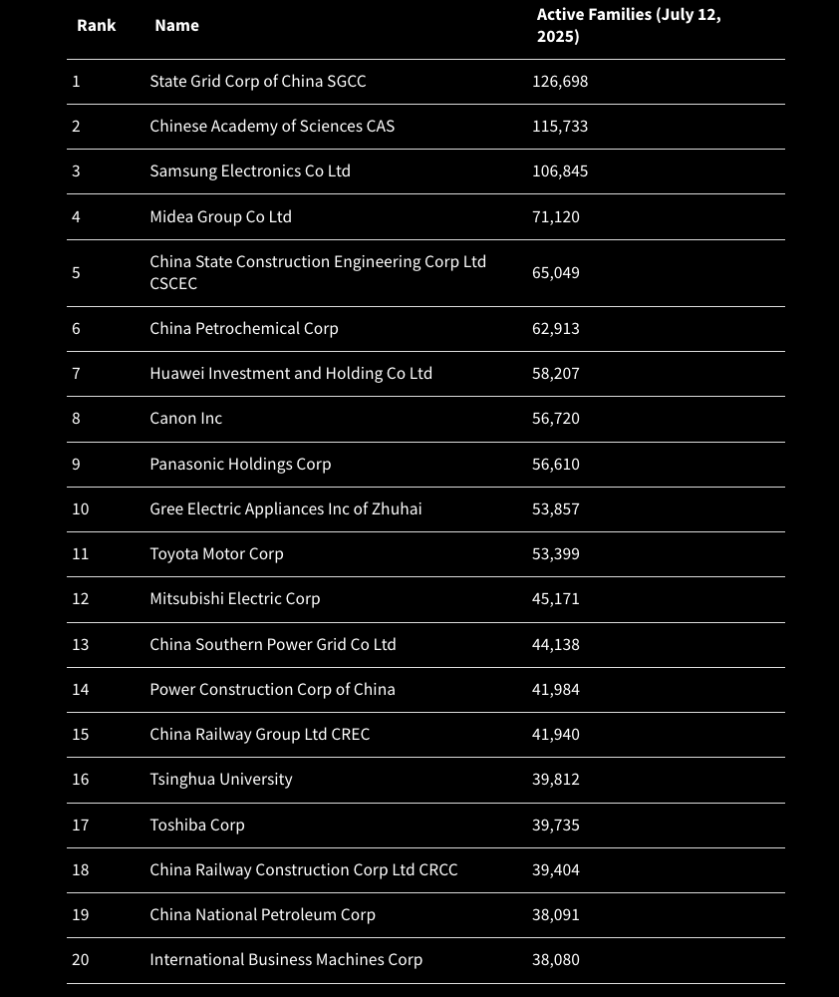
Once the dominant patent holder worldwide, the U.S. now has only one domestic business in the top 20 active global patent holders, IBM (20), whose stated mission is to file fewer patents.
The other four companies in the global 50 according to IFI Claims analysis: Qualcomm (34), Alphabet (42), Apple (43) and Intel (45).
Make no mistake U.S. business still secure and hold many important rights, especially in pharma, but the air – some would argue foul air – is escaping the balloon.
Quantity Means Something – Not Everything
This is not a reason to panic. We should be reminded when it comes to innovation, patent quantity is a positive indicator, especially when the rights are issued in in countries with reliable enforcement practices and consistent rule-of-law. It is not a guarantee of innovation or success.
An abundance of patents generally means filers are serious about capturing and monetizing their inventions and will want to defend what their rights, especially on their own turf. This is critical in a world of rapidly changing technologies and laws, where some markets are more meaningful than others.
When it comes to innovation, patent quantity is a positive indicator… It is not a guarantee of innovation or success.
In many industries today and there is increasingly less need for patents. In ecommerce, internet and software, for example, still major growth industries, patents are more difficult to obtain and uphold. GenAI platforms tend to believe copyrights, trade secrets and patents, as well as trademarks, don’t apply to their content-driven output. However, more licensing deals are starting to be signed by OpenAI, Gemini, Claude and other platforms in recognition that fair use does not apply to all content or IP.
What are we to make of the trend of more Asian company patents, especially in China, South Korea and Japan?
Japan has long been a significant holder of U.S. patents, although it mostly uses them for defensive purposes. South Korea, led by Samsung, for more than a decade has been the largest holder of active U.S. patents and families, far more than previous #1 annual grantee, IBM, which was the top recipient for 29 years. (IBM, historically, allows many of its patents lapse.)
China is much newer to securing and using patents, its own and others’. It remains to be seen how its holders will use their rights at home and abroad, for defensive purposes or for litigation.
For the full IFI Global 250 list of businesses with active patents, go here. IFI provides many helpful lists of patent holders by nation, industry and technology.
Image source: IFI Claims
 ipcloseup.com