
Inspiration that encourages “borrowing” or sampling from other creators is an accepted practice in many industries, up to a point.
When does the practice go from being an acceptable homage – as in fashion, music, food, film or even inventing – to an improper or illegal use of the property of others?
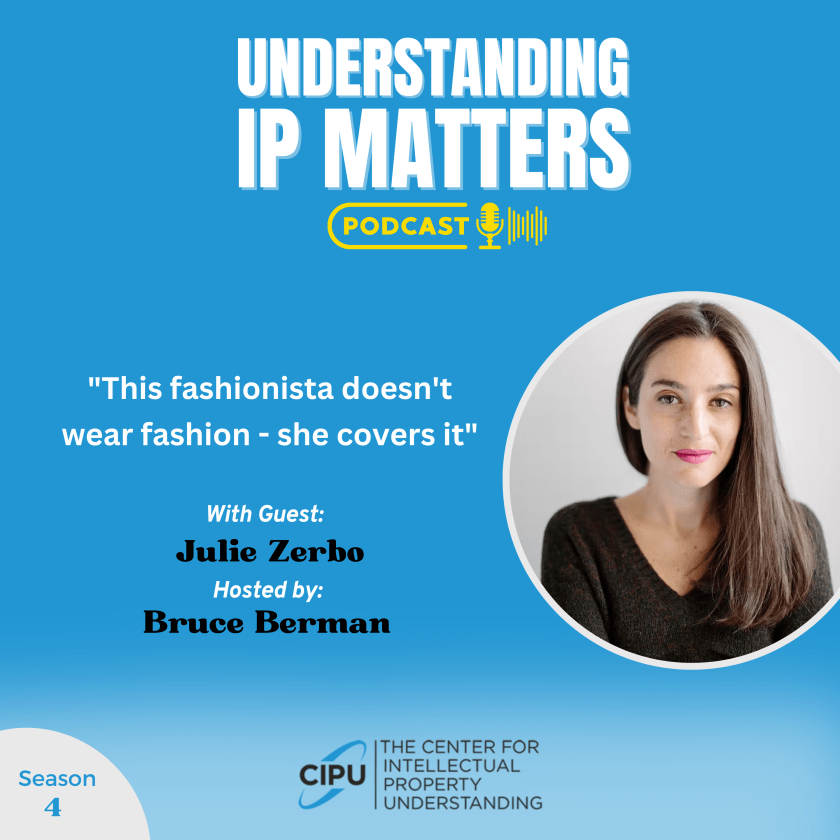
On the current episode of the “Understanding IP Matters” podcast (S4, Ep11), Julie Zerbo, editor of The Fashion Law (TFL), an independent industry daily that focuses on the business of fashion, discusses the use of intellectual property rights and evolving perspectives on trademark, design patents and trade secrets. She also talks about the need for greater transparency to sustain brand credibility and value.
Zerbo, a lawyer with an economics background, says buyers are increasingly concerned that what they purchase today eventually winds up in a trash  heap, an ecological burden. They also want to know about child labor restrictions, which Zerbo says are not being enforced as promised. “Transparency is lacking,” she says.
Another area of concern is clarity about how how to distinguish brands from “dupes” and “counterfeit goods,” definitions that are not universally clear, she explains.
Maintaining Brand Loyalty – Today
Cost of production, speed to market and social media mean a great deal to fashion brands today. So does brand loyalty. But sustaining those coveted assets is not easy matter, say Zerbo.
Fashion is a more highly commercial field than other creative pursuits, such as film or music, which have a much longer shelf life. Fashion today is produced to be purchased now, worn and discarded. The fashion market relies both on IP protection and creativity in establishing brands and giving new products instant credibility.
Sometimes, it is difficult to draw a line between where borrowing or sampling ends as an accepted practice and an improper or illegal use begins.
Another area of concern is clarity about how how to distinguish brands from “dupes” and “counterfeit goods,” definitions that are not universally clear.
Zerbo is an attorney with an economics background, editor-in-chief, and the founder of the site The Fashion Law. She specializes in how business and the law impact the fashion industry and consumer brands.
She began The Fashion Law site while still in law school in Washington and is now a sought-after expert in the retail industry who is regularly relied upon by brands, law firms and trade groups for her views on legal, business and technology trends.
In this episode of “Understanding IP Matters” – This Fashionista Doesn’t Wear Fashion – She Covers It, Zerbo and host Bruce Berman discuss:
- How brands are increasingly using design patents for “staple products,” items expected to be sold in high quantities or for longer periods of time.
- Why the vast majority of fashion other than couture and bespoke pieces is being made to be “sold in bulk,” which Zerbo thinks changes how much “borrowing” brands should be doing.
- How AI is currently impacting at least three aspects of the industry: marketing, design and the use of models.
- Industry terminology is a gray area that consumers should be aware of. The fashion market often refers to products as “dupes,” short for duplicates, which are legal knockoffs of branded products. Some sellers go beyond them by replicating products, logo and all. These are counterfeits.
- “There’s only so much novelty when you’re talking about a pair of pants,” reminds Zerbo.
To hear the full episode go here.
To see a video short of Julie from the podcast, go here.
To subscribe to “Understanding IP Matters,” tap here.
Image source: CIPU; understandingip.org
 ipcloseup.com