
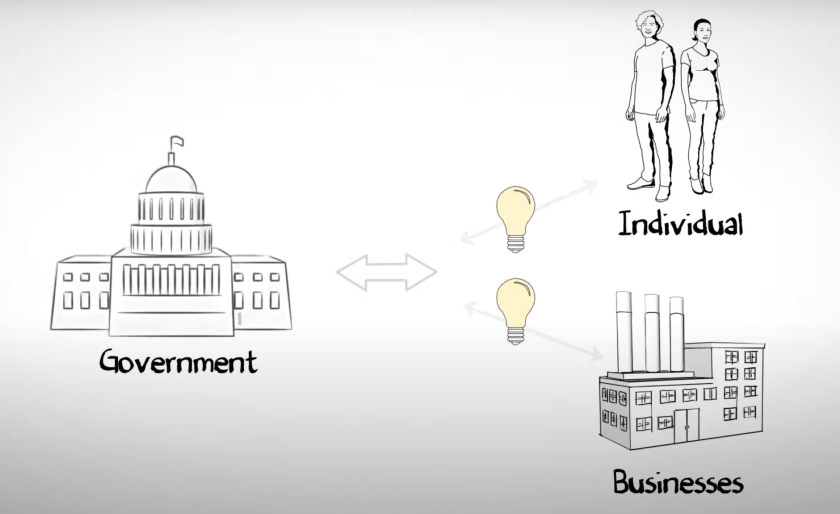
A two-minute whiteboard animation created several years ago about the purpose of IP rights recently exceeded 10,000 YouTube views. The reasons suggest that while general interest in IP rights is on the rise, so is confusion.
What are IP rights in practice and how do they affect people, businesses and society? These seemingly simple questions are not easily answered.
The explosive growth of creative content and inventive ideas, and ease of access and copying, has set the stage a dismissive attitude toward IP rights. It has also fueled misinformation about the nature and purpose of patents, copyrights, trademarks and trade secrets.
“What is Intellectual Property? Why Should I Care?”, a crudely drawn example of early computer graphics, is the product of the Center for Intellectual Property Understanding (CIPU), a nonpartisan nonprofit established in 2016. It is the kind of easily digested content that attracts eyes even if it does not turn heads. The IP community needs to provide more clear, accessible and easy to retain examples of what IP is an how it works; ones that resonate and don’t sound like the awkward definitions found in legal text books.
What IP is, How it Works and Who it Impacts
CIPU is the nonprofit that I helped to establish with former CAFC Chief Judge Paul Michel, Microsoft and IBM IP business chief Marshall Phelps, and others. It bridges the gap between what people think intellectual property rights are, how they actually work and what they impact. It also explores the ways to mitigate the disconnect.
It is important today to be aware of how IP rights like patents work in different industries and with various companies. Agenda differ, and so do strategies. The meaning and value of patents, copyrights, trademarks and trade secrets often depends on the business, size and industry it operates in. Small and independent owners typically have less leverage, despite the strength of their rights and extent of alleged infringement. Context matters.
… bridging the gap between between what intellectual property is, how it works and who it impacts
When creative content or a an inventive product appears to be free, or users believe they should, the urge to grab and use them can be compelling. This is true for consumers and businesses alike. Intangible asset theft, conscious or not, commercial or personal, is a serious matter that impacts everyone and compromises the quality of innovation and discourages investment. IP theft today is often imperceptible and subconscious, but collectively, no less insidious.
The U.S. is Still #1
There are reasons that the U.S. has been, and still remains, the leading technology and life science innovator and entertainment content creator. Many of them have to do with the reliability of IP rights as property and the steadiness of rule-of-law. Their certainty, however, is waning.
During the pandemic billboards in Washington DC and Geneva proclaimed that “Patents Kill.” Other media reminded uniformed audiences that licensing is synonymous with patent “trolls,” a pejorative term for litigation-motivated shakedowns. If anything “kills” it could be predatory patent behavior on the part of some large companies that makes licensing on fair and reasonable terms virtually impossible and impedes legitimate disruption by inventors and inventions considered a potential threat.
Good IP Behavior?
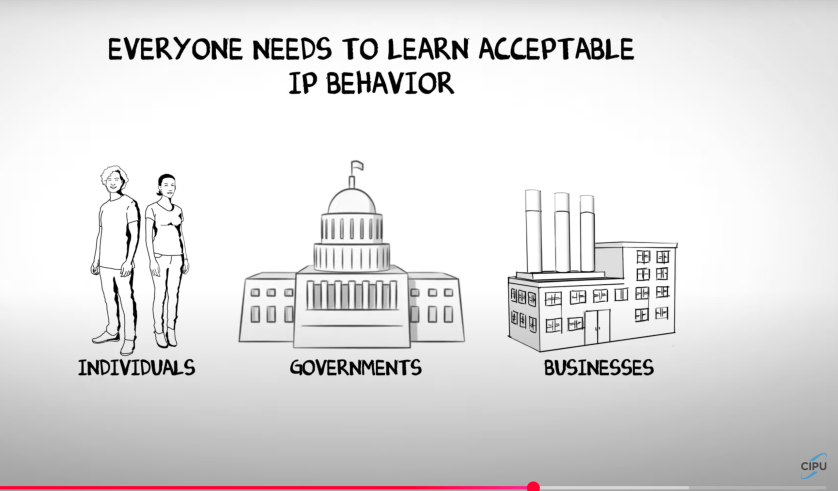
What is good IP behavior? For creators, businesses and consumers it may differ somewhat, but it always comes back to respect for legitimate rights and rule-of-law. It does not weaponize the high cost and protracted timeline of litigation or game the system. It recognizes that there is a cost associated with rights, no matter who owns them, and refusing to pay has consequences. For many businesses settling these disputes would barely be a blip on their impressive balance sheets.
There is no article, book or course about appropriate IP behavior. It’s not taught in high school civics class and rarely if ever in graduate business programs. Law schools, while teaching about IP law, not always positively, are loath to differentiate between legal and ethical behavior.
Large publicly held and highly monitored companies are increasingly sensitive to social issues like inclusiveness and sustainability, and are careful to respect real estate boundaries. It’s simply the right thing to do. But C-level executives have yet to step up regarding the IP actions of their company, which are often more about short term shareholder value than innovation or society. It may not appear that way at first, but it’s good business.
Both large companies and the public have something in common. They hate to pay for the IP they use, and many believe they should not have to. The damage this inflicts is somewhat abstract, but for a knowledge-dependent nation like the U.S. it is very real. Respect for IP rights needs to be taught in schools and explained clearly from a young age and reinforced by teachers, parents and policymakers. It also needs to be reinforced by managements who are aware of the danger of trampling on new ideas that are not theirs.
Audiences need to listen, but they also need to be listened to. IP holders need to understand what they are not hearing
Pulling up the Ladder
After a surge of strong patents and sympathetic courts in the 1990s and 2000s which led to unprecedented growth in innovation, and the founding of companies like, Google, Facebook and the growth of Apple, some businesses believe it’s necessary to pull the ladder up behind them. Simply put, weaker, less certain patents and copyrights, and timid courts, make it much harder for companies on their way up and individuals to compete, breakthrough innovation to prosper and new industries to grow.
C-level executives have yet to step up regarding the IP actions of their company, which are often more about short term shareholder value than innovation or society
Curated content like “What is Intellectual Property? Why should I Care,” and organizations like CIPU are necessary because they help to put things into perspective.
Audiences need to listen, but they also need to be listened to. The IP community, for its part, needs to understand what audiences are not hearing.
Image source: Center for IP Understanding (CIPU)
 ipcloseup.com