
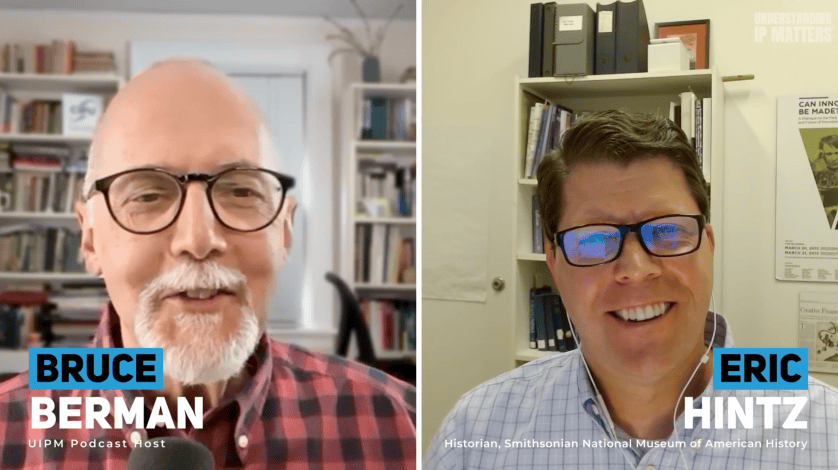
Those who led the founding of the U.S. 250 years ago were more astute than we could imagine. Even when they disagreed with each other they listened. Learn more about collaboration among American inventors – as well as the inventors of America – in the latest episode of “Understanding IP Matters,” which dropped today.
The signers of the Constitution, notably Madison and Hamilton, incorporated an ownership-driven intellectual rights model into the United States Constitution that enabled a fledgling, agrarian nation to eventually become a powerful industrial one, and while doing so, draw on a wide range of resources and people.
Merit not Privilege
“Before the U.S. Constitution came along, patents a monarchical ‘privilege’ in Europe at the behest of a King,” explains Eric Hintz, Smithsonian National Museum innovation history expert, on the season premiere of “Understanding IP Matters,” IP’s leading podcast.
“The IP system was intended to be egalitarian. This was at a time when women could not vote or own land and slavery was still part of the economy. Historical barriers of race, gender, and legal status kept many inventors, including enslaved people, off the books entirely. Women had the right to own patents but few did.”
Hintz reminds listeners that IP rights were held in extremely high regard in the U.S., even at that early stage of its growth. However, patent rights in America have swung back and forth between favoring individual inventors and favoring large corporations since at least the 1880s, and that pendulum is still moving today.
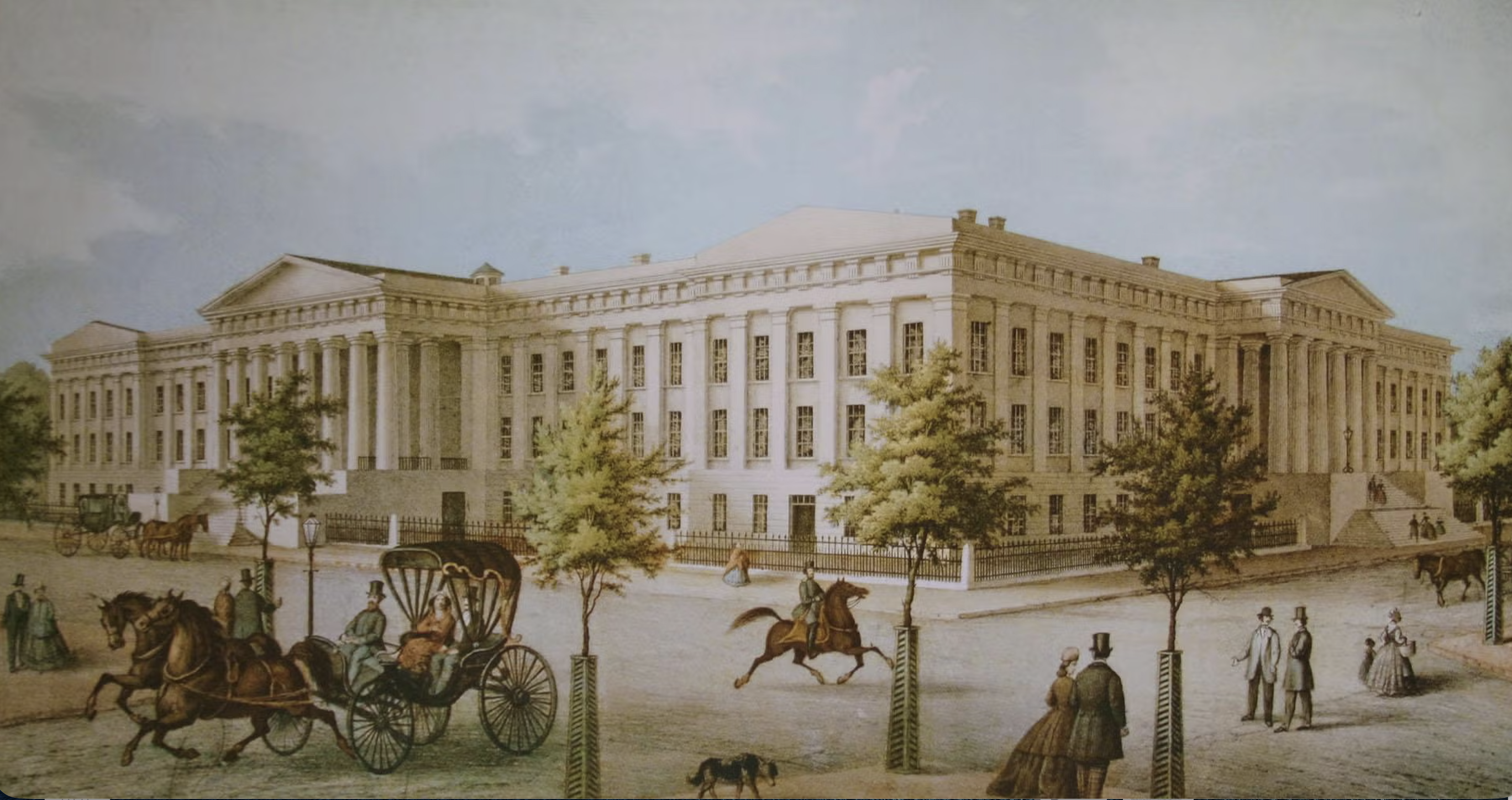
1837 United States Patent Office
“When there were still dirt roads in Washington DC, the government erected in 1837 a neoclassical U.S. Patent Office that was one of if not thee the coolest buildings in Washington,” he said of what is now the National Portrait Gallery and part of the Smithsonian. Inventors came to the Office to study its many invention models, a requirement since abandoned for patent grants.”
Alliances Work Better
Author of “American Independent Inventors in an Era of Corporate R&D,” Hintz explains that patented inventions tend to swing on a pendulum over history, but are most productive when there is an alliance between independent inventors and corporate R&D teams.
“It would be impossible for even the largest and most successful R&D department to provide all of the inventions it needs,” he explains. “An alliance of independent inventors who rely on their larger counterparts for capital and distribution has worked remarkably well over the decades, despite frequent disputes.” There are many examples.”
Hintz concludes: “A healthy innovation economy benefits from independent inventors, corporations, universities, and government all playing a role, since each contributes something the others cannot.”
Listen to the episode with Eric Hintz, “Patents, Power and the Fight Between the Davids and Goliaths”: https://www.buzzsprout.com/1537696
Watch the podcast here: https://www.youtube.com/channel/UCZk165UL2V8fNiJjVcQtnmQ
Image source: CIPU; Smithsonian Museum

