
Federal funding cuts are affecting scientists across the U.S. What this means for medical and technology inventions and their rights is unclear. The need to find alternative research funding is not.
Cuts are causing budget reductions, termination of ongoing research and disruption to the academia talent pipeline.
“Due to funding uncertainty, many schools are admitting fewer students,” writes R&D World. “MIT recently reported that new graduate enrollments are down almost 20%. The institution also said that campus-sponsored research activity is 10% smaller than a year ago.”
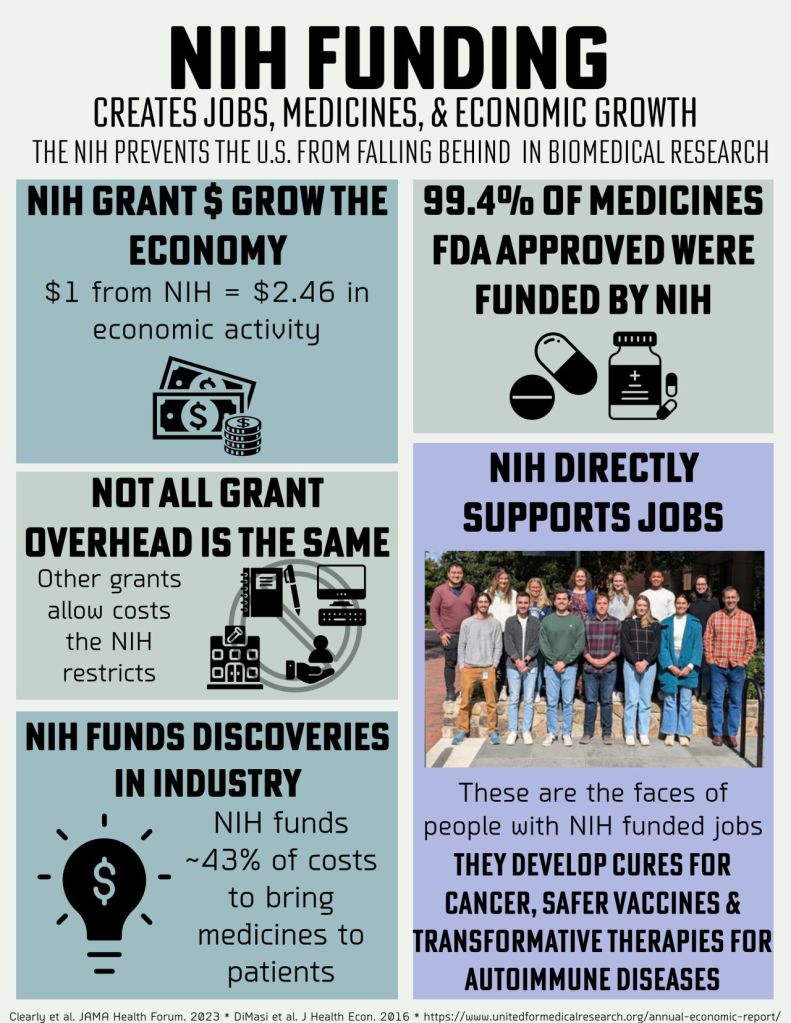
The National Institutes of Health (NIH), the world’s leading public funder of biomedical research, spending some $48 billion annually on universities, hospitals, labs, and other institutions, was asked to slash $9 billion of its budget.
The University of Washington speech-perception researcher, Erin Ingvalson was awaiting a decision on a proposal to study literacy in children with hearing impairments. With the future of government backing unclear, she froze hiring for a postdoctoral researcher and warned partner preschools that her timeline was uncertain.
“I feel like I don’t know what’s going to happen next,” Ingvalson told the Wall Street Journal. “It’s really challenging to plan long-term projects.”
Terminated or Frozen
Nearly 5,800 NIH grants have been terminated, frozen or disrupted since March 2025, estimates Grant Witness. Although court orders and settlements have helped restore some 4,550 of those, universities already have laid off staff and canceled projects.
Revenue diversification may be a key initiative for all colleges and universities in the years to come, reports O’connor Davies, accountants and advisors to universities.
“Mobilizing your institutional advancement initiatives in the area of private gifts, alumni donations, affinity programs and various other fundraising activities may bear significant results if this trend continues. Also, utilizing institutional resources, such as real estate, to its full revenue generating potential can provide a significant additional source of revenue.”
Earlier and more aggressive business partnerships and investments, and more technology transfer activities may also help make up for government shortfalls. Research speed and quality are bound to suffer, which will impact overall invention quality and licensing income, as well as slow the pace of biomedical and other discoveries.
More and Deeper University-Industry Partnerships?
MIT has implemented budget cuts across the institution to deal with federal funding cuts. The university is also “aggressively pursuing” new funding from industry, including with the MIT IBM Computing Research Lab for AI and quantum computing.
Additionally, MIT is using its Washington office to lobby Congress and raise awareness of the damage caused by the new 8% tax on endowment returns. The tax was signed into law in July 2025 has part of the One Big Beautiful Bill. It applies to private nonprofit institutions with endowment assets exceeding $2 million per enrolled student.
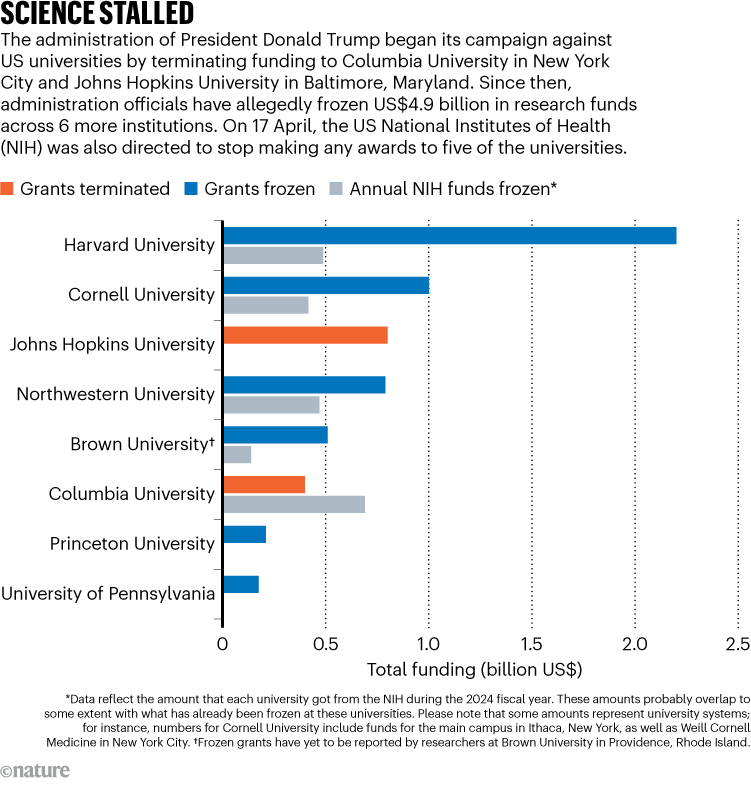
At Harvard University, which is facing more than $2.2 billion in cuts, professors are turning away students asking to work in their lab as scholars search for jobs abroad. The university allocated an emergency $250 million to support campus research.
Image source: Nature; Health Policy Watch

