
The costs and risks associated with movie production and marketing today have expanded the use of “safer” franchise characters and driven the value of bankable IP assets and their licensing rights to new heights.
The Marvel Universe, a leader in the action category with Spider-Man, Iron Man, Captain America, Thor, Wolverine, and Hulk, as well as teams such as the Avengers, X-Men and Fantastic Four. Batman and Harry Potter, have long been valuable licensing properties; K-Pop Demon Hunters and, for younger children, Bluey, have ushered in a new generation of iconic characters.
While franchise characters that resonate with audiences and their IP rights have been accused of destroying the movie industry, robbing it of meaningful storylines and live actors, the sad truth is that they are readily leverageable IP assets that help studios generate the funds to fuel independent production.
Characters have extraordinary associative value beyond their initial appeal. For the right licensee, presented in the right way, they can help to positively attune buyers to new products or revive old ones.
Positive Associations
Born Licensing’s David Born is an Australian-born pioneer in matching the right superhero or animated character with the appropriate licensee. Licensees are then able to use the positive association strategically to grow their reputation and sales. It’s a proven strategy that often works.
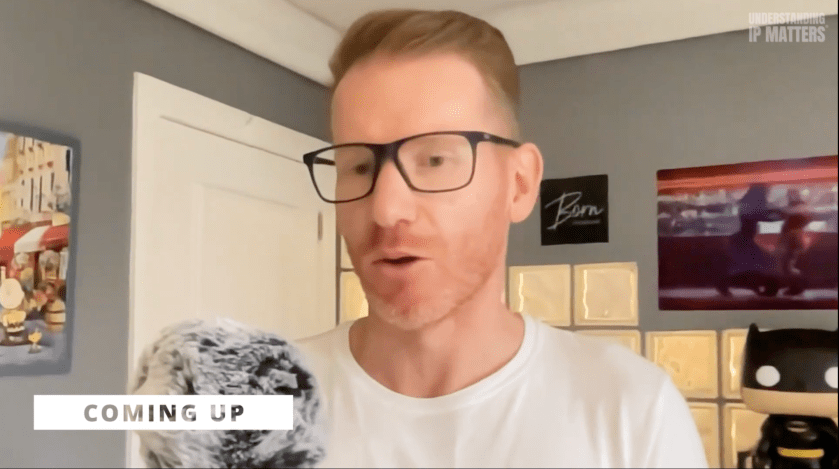
On Ep11 of Understanding IP Matters, “The $370 Billion Character Licensing Boom,” Born tells host Bruce Berman that licensees need to make certain the character they use resonates with their audience.
Characters have extraordinary associative value beyond their initial appeal. For the right licensee, presented in the right way, they can help to positively attune buyers to new products or revive old ones.
“With character licensing, you have to be really careful not to assume something is working if it is not. The creative needs to be really authentic. There’s nothing worse than putting something out there and fans come after you saying, ‘you know, Batman wouldn’t say that,’ or ‘this character has sold out for this ad campaign.’
“What people are saying matters,” says Born. “The best case studies we have are when the everyday person on YouTube and on social media is saying, ‘I love seeing this character.’ ‘I hadn’t seen this character for a while and I hadn’t seen it in this particular context.'”
__________
To see the video of the discussion with David Born, visit CIPU’s YouTube channel.
To hear the audio, go to Buzzsprout where you can find the platform of your choice.
__________
Resonating Assets
What makes an super-hero or a fantasy character like Barbie resonate with a particular audience is not entirely clear. But the value they generate and the benefits of applying it to other products and services — not just licensed toys — is fairly clear. Below are cases using charactes to extend a product’s appeal and enhance brand value.
- DC Superheroes (Superman, Batman, Wonder Woman): The Vitamin Shoppe has partnered with Warner Bros. to feature these characters on performance supplements like nitrulline powder.
- DC Superheroes (Superman, Batman, Wonder Woman): The Vitamin Shoppe has partnered with Warner Bros. to feature these characters on performance supplements like nitrulline powder.
- Wonder Woman: Inspired a line of workout gear from Heroine Sport sold at Saks Fifth Avenue.
- Hygiene & Health: Wonder Woman is now associated with dental hygiene products (Colgate) and first-aid supplies to encourage healthy habits in kids.
- Retail & Lifestyle: The 2025/2026 Superman relaunch has sparked partnerships with brands like Pottery Barn Kids for home goods and Crocs for footwear.
Resource Constrained
“The big licensing companies are dealing with thousands and thousands of submissions on a daily basis,” explains Born. “It does really start to become a resource issue, particularly when you’ve got a lot of consolidation happening in among [content generators and aggregators] right now and they just have to be extremely selective with who they’re going to be spending time with, not just from the perspective of time and renvenue, but could it potentially damage their brand to be associated with them?
Born believes licensing in general can be translated across every single industry.
“We’ve talked about advertising, you know, we’ve talked about consumer products, but it can also be translated across tech, new technologies. Licensing is such a versatile thing that when new value emerges, where there is innovation covered by rights like trademarks and copyrights, licensing always finds its way there.”
AI is Moving Cautiously
“AI is moving at a fast pace that we are really struggling to keep up with and it’s a very sensitive topic in the licensing world. Licensors and Licensees are starting to embrace AI in a way that will help them be more efficient with their processes and risk.
“With character licensing, you have to be really careful not to assume something is working if it is not. The creative needs to be really authentic. There’s nothing worse than putting something out there and fans come after you saying, ‘you know, Batman wouldn’t say that.'”
“But I still feel like the AI is kind of the Wild West. There’s still a lot of doubt around how the licensing world can bring AI in to assist without opening a Pandora’s box. And a lot of that is around entertainment creating IP content. There is tremendous sensitivity in Hollywood about AI and how their IP will potentially be impacted.
“I’m really trying to pay attention as to how AI will transform our licesning. It was very interesting when Disney signed a billion dollar deal with OpenAI’s Sora last year and then recently completely backed out of it.* I was really keen to see where that relationship was going to go because, because it’s one of those things that if in our industry, if Disney does something, it kind of gives a permission slip for everybody else to do it.”
__________
To see the video of the discussion with David Born, visit CIPU’s YouTube channel.
To hear the audio, go to Buzzsprout where you can find the platform of your choice.
___________________________
*Disney has canceled its planned $1 billion investment and partnership deal with OpenAI. The deal, which was announced in December 2025 to bring 200+ characters to the Sora AI video generator, was terminated in March 2026 after OpenAI decided to shut down the Sora video app. OpenAI Spent $15 Million a Day on Sora. It Earned $2.1 Million Total.
**Under a three-year licensing agreement, Sora planned to generate user-prompted videos using more than 200 characters from Disney, Marvel, Pixar, and Star Wars.
Image source: CIPU

