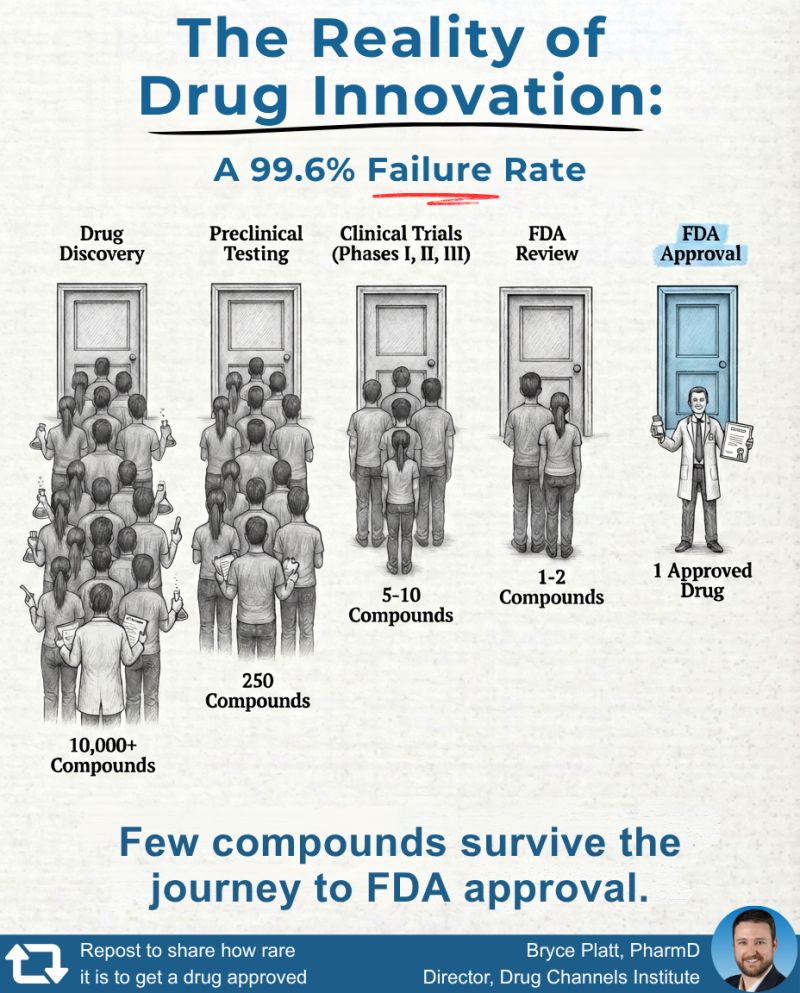
The cost to develop new drugs and vaccines is growing and the success rate may be slowing. Likelihood of approval for new FDA Phase I trials is just 6.7%.
It’s unclear whether the lack of results is a result of more compounds in the pipeline or more stringent FDA standards. Whatever the case the financial impact is daunting. The use of AI is likely to speed discovery and development, and help to contain costs, and M&A may help.
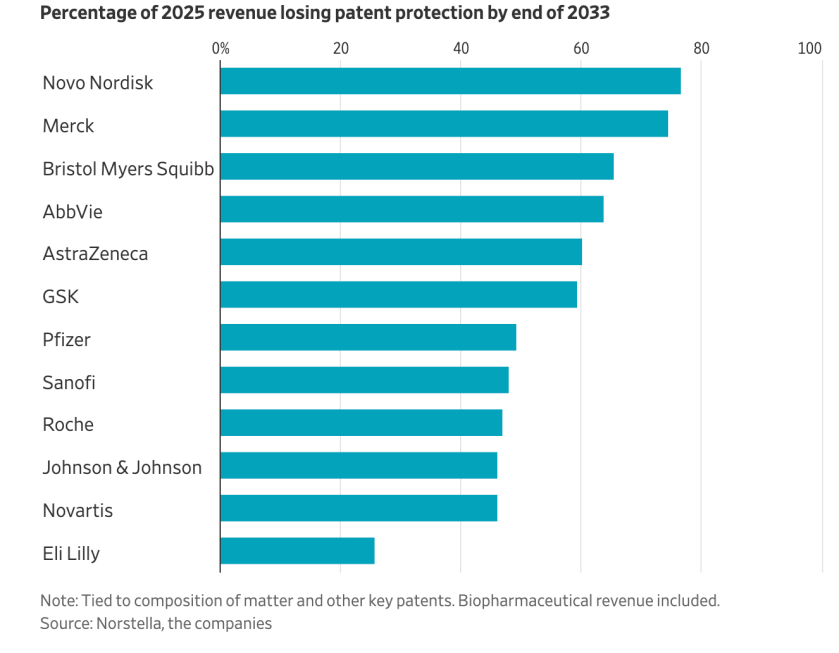
The pharmaceutical industry faces its largest-ever patent “cliff” between 2025 and 2030, with over $230 billion to $400 billion in annual branded drug sales losing exclusivity. [1, 2] There is a huge gap to fill with only 12% of human clinical trial drugs win FDA approval.
When you think about medical science developments over the past 30 years, containing or curing everything from specific cancers to ebola, we have come a long way. But huge and risky capital expenditures by investors create expectations for greater financial returns. They put pressure on the companies to succeed and on regulators to approve drugs faster.
Drug discovery is not for the faint of heart or shallow of pocket. But it needs to be done and the U.S. and a few other nations have gotten pretty good at it, even if for every success there are multiple costly failures.
Total Costs
The total cost to discover, develop, and gain approval for a new prescription drug typically ranges from $1billion to $2.2billion, though some industry-funded estimates climb as high as $2.6 billion to $4.4 billion. Out-of-pocket research expenses alone average around $173 million to $350 million, with the final total skyrocketing due to the high rate of clinical trial failures and capital costs. [1, 2, 3, 4, 5]
Cost of research and development for a single new prescription drug from initial discovery to commercial launch ranges from $2 billion to $2.7 billion.
According to University of Michigan, the cost of research, developing a single new prescription drug from initial discovery to commercial launch ranges from $2 billion to $2.7 billion today. This all-in figure accounts for capitalized research expenses, clinical trial operations, regulatory compliance, and the high rate of candidate failures across a 10-to-15-year lifecycle. [1, 2, 3, 4, 5]
Preclinical and Discovery ($0.6.5, 0.6.8): Basic lab research, target identification, and animal testing account for a smaller, foundational share of total spending (roughly 7% to 30% when factoring in failed compounds). [1, 2, 3]
Clinical Trials ($0.6.5, 0.6.8): Human testing across Phases I, II, and III consumes roughly 68% of total expenditures ($117+ million out-of-pocket baseline), driven by large patient groups, complex monitoring, and strict U.S. Food and Drug Administration (FDA) regulations. [1, 2, 3]
Cost of Failures ($0.6.3, 0.6.7): Only about 12% of candidate drugs that enter human clinical trials successfully win market approval. Funding the dozens of failed compounds heavily inflates the final price tag of successful drugs. [1]